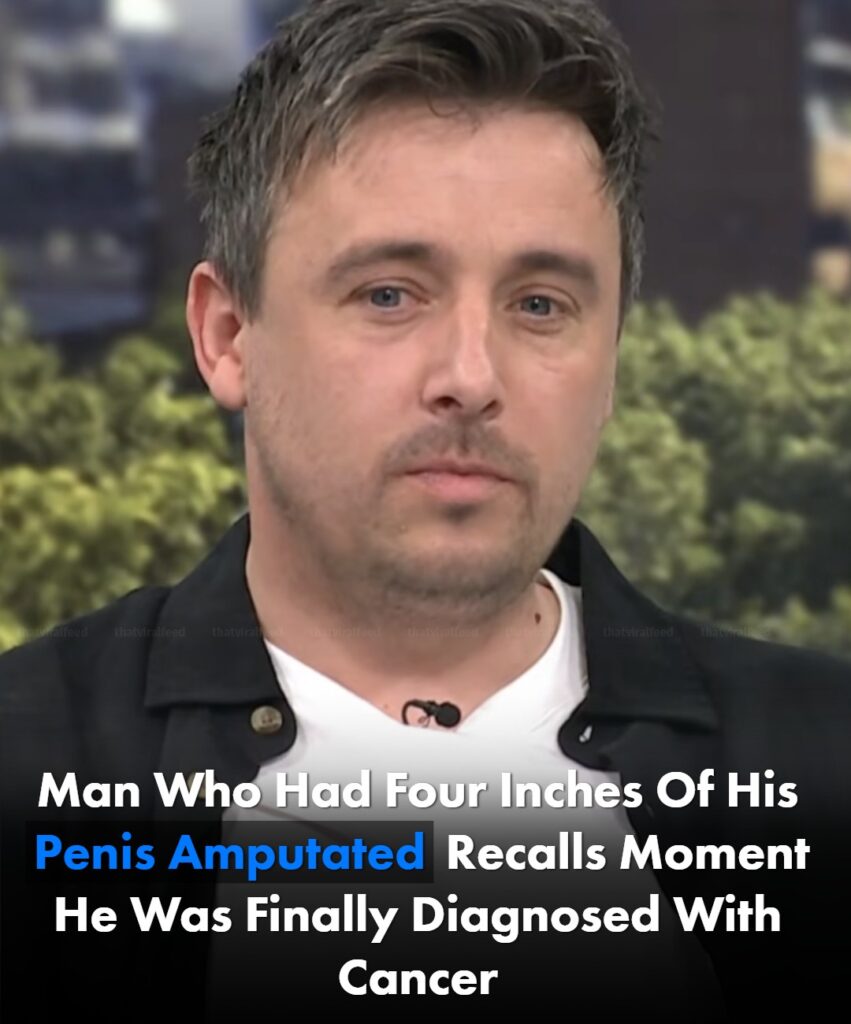
Steven Hamill explained why he first reacted in a way many men might understand
A man has spoken about his experience with a rare and serious health condition that affects hundreds of people each year, after it led to him having four inches of his penis amputated.
Steven Hamill was only 26 years old when he received a penile cancer diagnosis in 2019, after first noticing symptoms that he did not fully understand at the time.
His condition became urgent after swelling developed in his groin. He was rushed to the emergency room after he passed out and later woke up in a pool of his own blood.
Once Steven arrived at the hospital, doctors diagnosed him with penile cancer and moved quickly to treat it, as the situation had already become serious.
He underwent emergency surgery to remove the tumor. The life-saving procedure meant surgeons had to amputate four inches from his penis, but Steven is now in remission.
Steven spoke about what happened during a recent appearance on ITV’s This Morning, where he recalled the first sign that made him realize something was wrong: “I woke up one morning and as every man does they’ll go for their morning wee, and I looked down, it was very swollen, and instantly I didn’t really know what was going on.”

Steven Hamill had surgery to save his lifeITV
‘Something isn’t right’
“As a 26-year-old man it was very ‘hmm what’s this’, so I did what every guy would probably do – ignore it [and] hope it goes away itself.”
Steven went on to explain that another alarming moment came one morning while he was making a cup of tea. He said he suddenly ‘felt something wet’ in his groin area, and when he checked, he was shocked to see ‘blood everywhere’.
He shouted for his partner, who at first asked if he had a nosebleed. That moment made Steven realize the problem could not be ignored any longer, and he knew he needed to get it checked.
At that point, Steven said he did not even know what penile cancer was. He only knew that his body was showing signs that were not normal, and in his words, ‘something isn’t right’.
When he first went to see a doctor, Steven was told that penile cancer mostly affects older patients, usually men in their 60s or above, which made the diagnosis seem unlikely at first.
The American Cancer Society says penile cancer is diagnosed in fewer than one in 100,000 American men each year. Even so, the organization estimates that around 2,260 new cases will be diagnosed in 2026.

He has opened up about his health conditionITV
‘I just passed out’
Steven said the doctor went through the symptoms with him, and many of them sounded similar to what he was dealing with. However, he said the doctor apparently told him: “But it can’t be penile cancer, you’re 26, it only affects men over 50.”
At first, the medic believed Steven may have had a severe case of balanitis. This is a bacterial infection that can make the penis swollen, sore, irritated, and painful.
Steven was given a cream to use, and for around three weeks he applied it while hoping the problem would settle down. Instead, the pain became severe, and he described it as feeling ‘if I had a needle and I was just poking the head consistently every second’, adding that ‘there was no respite’.
“I was just living life like that putting this cream on hoping it would get better,” he said, explaining that he kept trying the treatment while hoping the symptoms would improve on their own.
About a month later, the situation became much more frightening when Steven suddenly passed out.
“I was in my brother’s car in Morrisons’ car park when the big one happened. I just passed out,” he continued, describing the moment that showed just how serious his condition had become.
After going to the emergency room, Steven said he was given an appointment, but he was still determined to attend his sister’s wedding first. He wore an adult diaper to help manage the bleeding while trying to get through the day.
When he later went to his urologist appointment, the seriousness of the situation started to sink in. Steven noticed that the nurse was wearing a Macmillan Cancer Support lanyard, which made him fear that the appointment was about something much more serious.
Thankfully, after the diagnosis, Steven’s surgery was successful. The tumor was removed, and he is now in remission after going through treatment for a condition he had never expected to face at such a young age.
Why Steven is speaking out
Steven’s story shows why it can be dangerous to ignore symptoms, even when they feel embarrassing or when a person believes they are too young for a serious diagnosis.
His first reaction was to wait and hope the swelling would go away, which he admitted is something many men might do. But his symptoms became harder to ignore once bleeding, pain, and fainting entered the picture.
By sharing what happened, Steven is helping bring attention to a cancer that is not often discussed. His case also shows that rare conditions can still affect younger people, even when they are more common in older age groups.
What are the symptoms of penile cancer?
According to the NHS, most cases of penile cancer affect the skin covering the penis, known as the foreskin, or the head or tip of the penis, known as the glans.
The most common symptoms of penile cancer include:
- A growth, lump, or sore that does not heal within four weeks
- A rash on the penis
- Bleeding from the penis or surrounding skin
- Smelly discharge
- Having difficulty pulling back your foreskin
- Unexplained changes in skin color

Penile cancer is considered rareGetty Stock Images
Other symptoms may also appear, especially if the disease has progressed or started affecting nearby areas of the body.
- A lump in the groin
- Feeling unusually tired
- Pain in the tummy
- Losing weight without trying
Anyone who notices these symptoms should get medical advice rather than waiting for them to clear up on their own. Steven’s experience shows how important it is to take unusual changes seriously, even when the cause turns out to be rare.
Getting checked can make a difference
Penile cancer can feel like a difficult topic to talk about, but Steven’s experience makes one point clear: embarrassment should not stop someone from getting help.
Many symptoms linked to penile cancer can also be caused by infections or other less serious conditions, but only a medical professional can check properly and decide what is going on.
In Steven’s case, the early signs started with swelling, then bleeding, severe pain, and eventually passing out. His diagnosis led to major surgery, but the operation saved his life and he is now in remission.