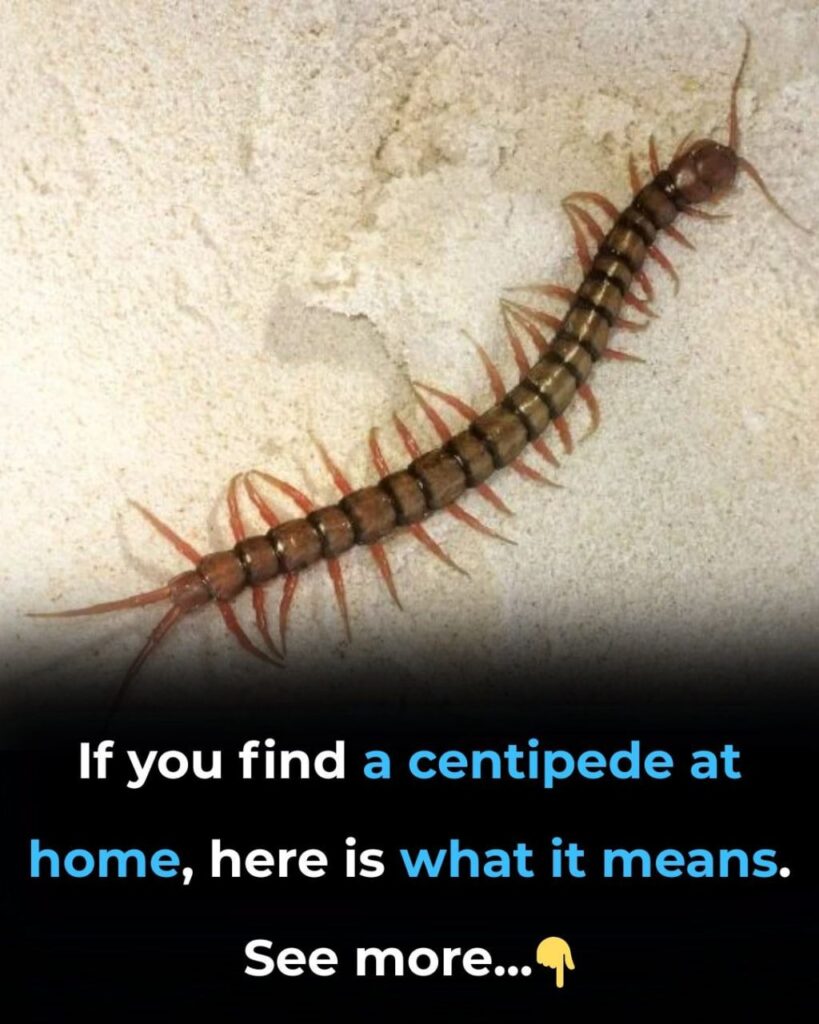
Beyond the practical, centipedes carry rich symbolic meaning in many cultures.
In Feng Shui and Chinese Tradition
In Chinese culture, centipedes are one of the “Five Poisons,” alongside snakes, scorpions, toads, and spiders. Their appearance is traditionally seen as:
- A warning of hidden dangers or enemies
- A sign to be cautious in business or relationships
- An indication that something toxic — literally or metaphorically — needs to be addressed
However, context matters. A centipede appearing in a dream or at a specific time may carry a different meaning than one simply crossing your path.
In Native American Traditions
Some Native American tribes view the centipede as a symbol of:
- Speed and agility — moving quickly through challenges
- Adaptability — thriving in hidden, dark spaces
- Protection — its venomous nature represents the ability to defend oneself
In Japanese Folklore
Centipedes (mukade) are complex symbols associated with both danger and protection. The giant centipede appears in myths as either a monster or a guardian. In some stories, killing a centipede brings bad luck; in others, it brings blessings.
In African Traditions
In some African cultures, centipedes symbolize:
- Secrets and hidden knowledge — their silent movements and hidden habitats represent concealed truths
- Patience and persistence — their many legs symbolize steady, methodical progress
In Western Symbolism
Western interpretations often focus on the centipede’s unsettling appearance, but deeper meanings include:
- Coordination — many legs working together symbolize teamwork and complexity
- Transformation — shedding their exoskeleton represents growth and renewal
- The shadow self — what hides in darkness, waiting to be acknowledged
Common Superstitions About Centipedes in the Home
| Superstition | Meaning |
|---|---|
| Killing a centipede brings bad luck | Some traditions consider them protectors, and harming one may invite misfortune |
| Seeing a centipede means money is coming | In some cultures, the many legs symbolize wealth “walking in” |
| Centipedes appear when someone is hiding something | Their secretive behavior represents hidden truths |
| A centipede in the bathroom means emotional cleansing is needed | Water-related spaces symbolize emotions and inner reflection |
| Multiple centipedes mean imbalance | Frequent sightings may indicate excess moisture or an insect problem |
What to Do When You Find a Centipede
Option 1: Let It Be
If the centipede is not causing harm, consider leaving it alone. Centipedes prey on other household pests and may help control insects naturally. If you’ve only seen one, it’s usually not a serious issue.
Option 2: Capture and Release
If you prefer not to share your space, gently trap it in a jar and release it outside.
Option 3: Address the Underlying Cause
If you regularly see centipedes indoors, consider checking for:
- Excess humidity — use dehumidifiers in bathrooms or basements
- Entry points — seal cracks around doors, windows, and foundations
- Other insects — centipedes stay where food is available
- Clutter — they hide in boxes, paper, and dark corners
The Deeper Message: What the Centipede Might Represent
Beyond superstition and pest control, a centipede’s appearance can invite reflection.
Is Something Hidden in Your Life?
Centipedes live in dark, unnoticed places. Seeing one may prompt questions like:
- What am I ignoring?
- Is there a problem I’ve avoided addressing?
- Are there small issues growing unnoticed?
- Is something ready to be brought into the light?
Are You Pulled in Too Many Directions?
The centipede’s many legs can symbolize juggling too many responsibilities at once. Its appearance may be a reminder to slow down and regain balance.
Is It Time for Change?
Like other arthropods, centipedes molt and shed their outer layer as they grow. Symbolically, this can represent letting go of habits, situations, or beliefs that no longer serve you.
The Bottom Line
Finding a centipede in your home can mean different things depending on your perspective:
- Practically: It may signal moisture or the presence of other insects
- Culturally: It can symbolize warning, protection, persistence, or transformation
- Symbolically: It may encourage reflection, awareness, and personal growth
Most simply, though, it means you share your environment with the natural world. A centipede is not trying to harm you — it is simply following its instincts in search of food and shelter.